14 Everyday Things That Show How Big Is 2 cm (In Ways You’d Never Expect)
14 Everyday Things That Show How Big Is 2 cm
Ever grabbed a ruler just to measure something tiny and thought, “there has to be an easier way”? You are not alone. Knowing how big is 2 cm without a ruler is one of those small life skills nobody teaches you but everyone needs.
2 cm is exactly 20 millimeters. That is roughly the width of your thumbnail. Once you know a few 2 cm reference objects, you will never feel lost with small measurements again.
Let’s walk through 14 things sitting right around you that are almost exactly two centimeters in real life.
Understanding the Magic of Two Centimeters
Two centimeters does not sound like much. But in the real world, it shows up constantly in places you never noticed.
Think about the last time you bought a button, fixed a staple, or plugged in a USB drive. All of those involve 2 cm measurement examples without you even realizing it.
Once your brain locks onto this small measurement guide, you start seeing 2 cm everywhere. It becomes your secret ruler.
1. The Humble Paperclip: A Nearly Perfect Stand-In for 2 cm
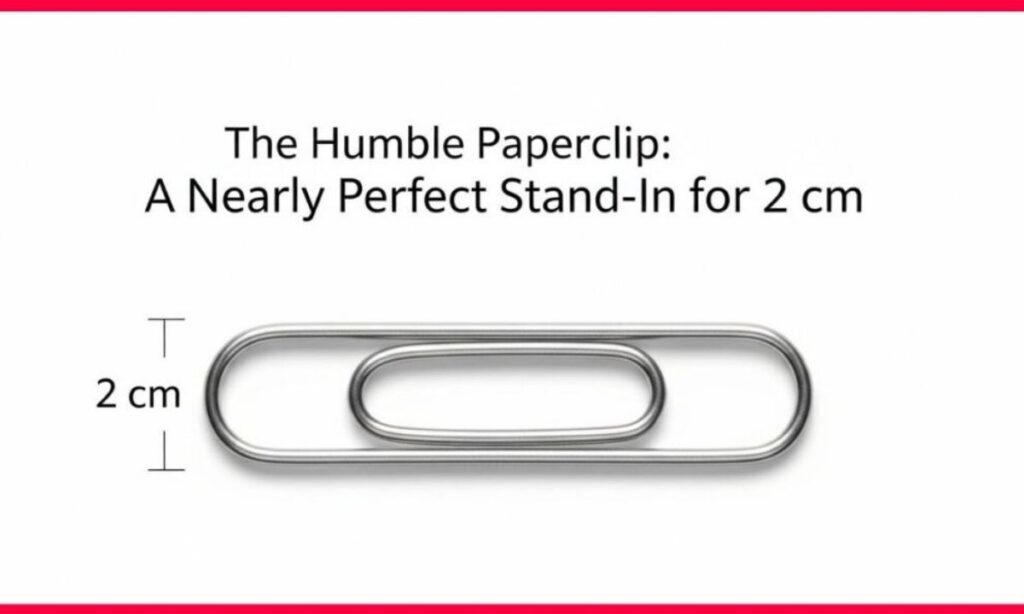
A standard paperclip length sits right around 3.2 cm total, but the inner loop width? Almost exactly 2 cm. That makes it one of the best free rulers in your drawer.
Next time someone asks you “what does 2 cm look like,” just grab a paperclip and point to the loop. No explaining needed.
It is the most underrated household measurement reference sitting in every office and home.
2. A U.S. Nickel / Five-Cent Coin: Almost the Diameter of 2 cm
The nickel diameter is 21.21 mm. That is just barely over 20 millimeters, which puts it extremely close to our 2 cm target.
Coins are great for object size comparison because everyone has one nearby. Slide a nickel across a surface and you instantly understand the 2 cm size comparison in physical form.
This is one of those real-world measurements tricks that actually sticks in your memory.
3. A Cheery Pencil Eraser: Small but Mighty
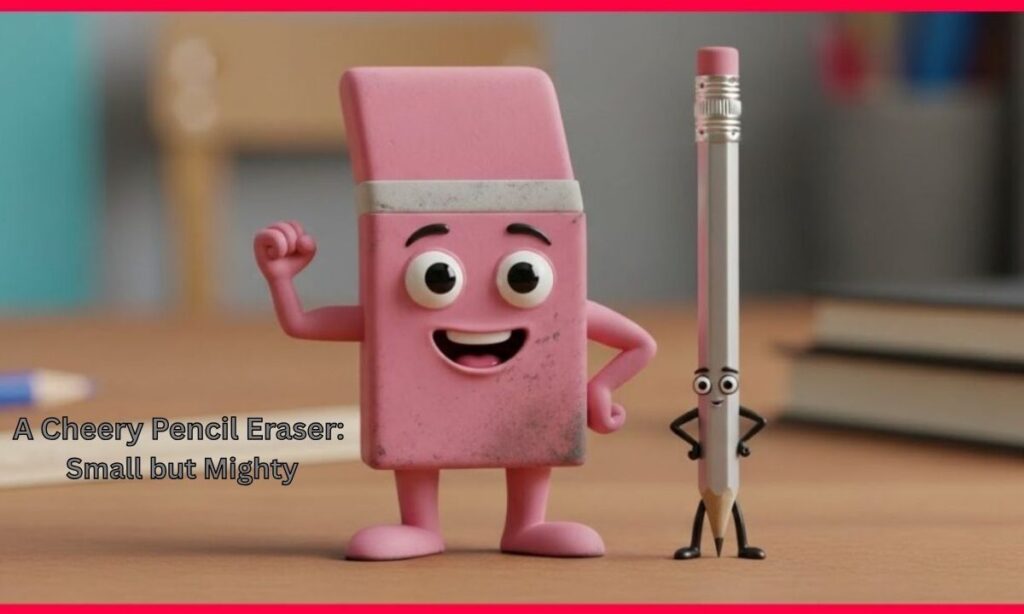
The pencil eraser size on a standard yellow pencil is almost always right around 2 cm wide. Press it to your finger and feel exactly how small but real that space is.
Kids use this trick in school all the time without knowing it. It is one of the most natural centimeter comparison tools hiding in your pencil case.
Next time you need to explain two centimeters in real life to someone, hand them a pencil. Done.
4. A USB Stick / Flash Drive Edge (Often Around 2 cm Wide)
The USB flash drive width on most standard drives is surprisingly close to 2 cm. Flip it on its short side and you have yourself a solid 2 cm length example.
This works especially well for tech people who always have a drive nearby but never think of it as a measurement tool.
It is a quirky but surprisingly accurate everyday object at 2 cm that fits right in your pocket.
5. A Shirt Button: Simple, Round, Often Near 2 cm in Diameter
The shirt button diameter on dress shirts and casual tops usually falls between 15 mm and 20 mm. The larger ones land right at 2 cm, making buttons one of the most overlooked 2 cm reference objects.
Pop a button off an old shirt (or just look at one still on the shirt) and you have a quick visual.
Buttons are everywhere, which makes them one of the most practical common items 2 cm long for quick size checks.
6. A Slender Matchstick (The Head or the Stick’s Width)
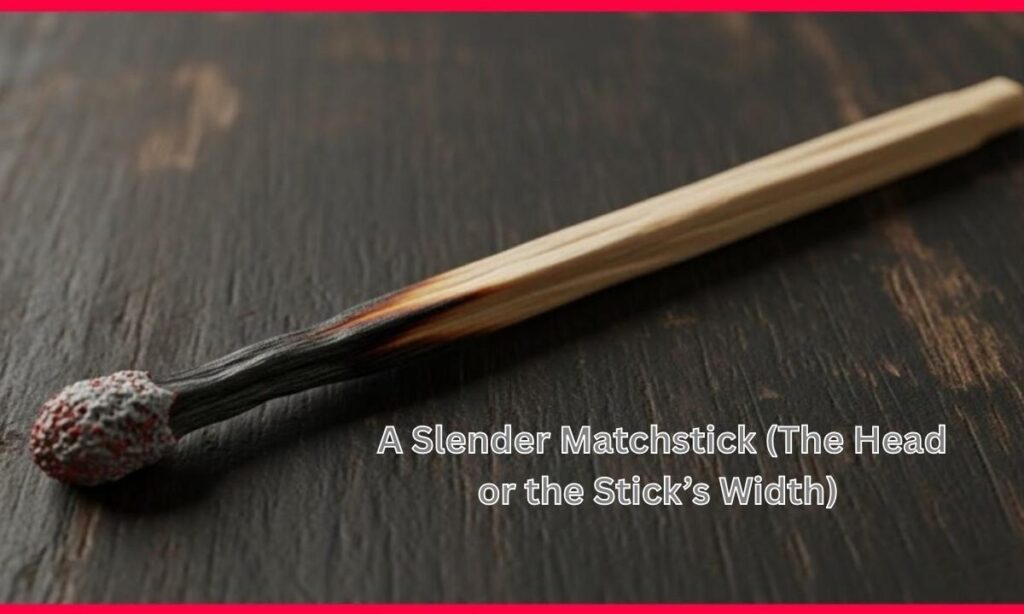
Matchstick measurements are interesting. The total stick is longer, but the head width and the stick diameter? Very close to just under 2 cm depending on the brand.
Match boxes live in almost every kitchen drawer. They make a surprisingly handy ruler alternative when you are mid-project and cannot find the real thing.
This is the kind of DIY measurement tip that sounds odd until you actually try it once.
7. A Reliable Sewing Needle: Especially the Eye Area
Sewing needle size varies, but many mid-sized needles have an eye length close to 2 cm when you include the flat top portion. Craft lovers already handle these daily.
If you do any kind of sewing or crafting, you already hold 20 millimeters in your hand regularly without realizing it.
It is a perfect example of how metric measurement hides inside your everyday hobbies.
8. A Staple: Small but Sharp in Size
Staple length on a standard office staple is typically around 1.2 cm to 2 cm depending on the size. The wider staples used in bookbinding hit that 2 cm measurement almost perfectly.
Line two regular staples end to end and you are right in the 2 cm range. Simple, fast, effective.
Staples are one of those small object dimensions that quietly prove how often this measurement pops up in daily life.
9. A Pen Cap Tip or Clip Area
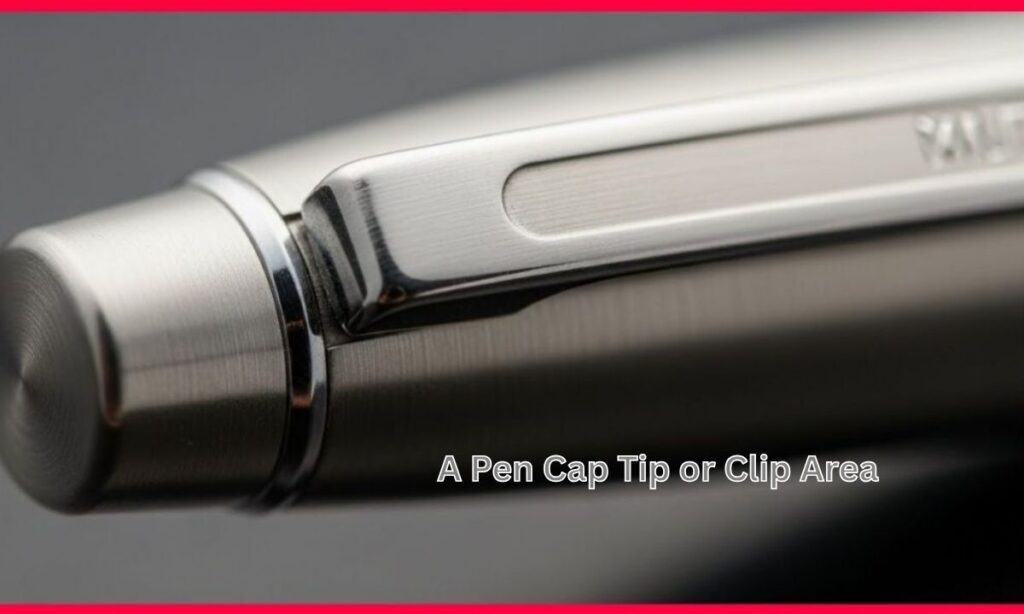
The pen cap clip size on most standard ballpoint pens runs about 2 cm in the clip length area. It is one of those spots on everyday objects you touch but never measure.
Grab any pen nearby and look at the clip on the cap. That strip of plastic or metal? Almost exactly 2 cm long.
It turns your most used desk item into a quick practical measurement guide you never have to carry around.
10. A Chunky Coat Button
Coat button size runs larger than shirt buttons. Most fall right at or just above 2 cm in diameter, making them one of the easiest visual anchors for this measurement.
Heavy winter coats often use buttons in the 20 to 25 mm range. The smaller end of that sits right at our 2 cm size comparison sweet spot.
Button up your coat and you are literally covered in household size references.
11. A Triangular Guitar Pick
Guitar pick dimensions for a standard medium pick land close to 2.5 to 3 cm at their widest, but the pointed tip to the nearest edge? Right around 2 cm.
Musicians carry picks everywhere. Now they can also carry a mental ruler in their pocket.
This is one of those length visualization tricks that musicians will actually remember and use.
12. A Paper Hole Reinforcer
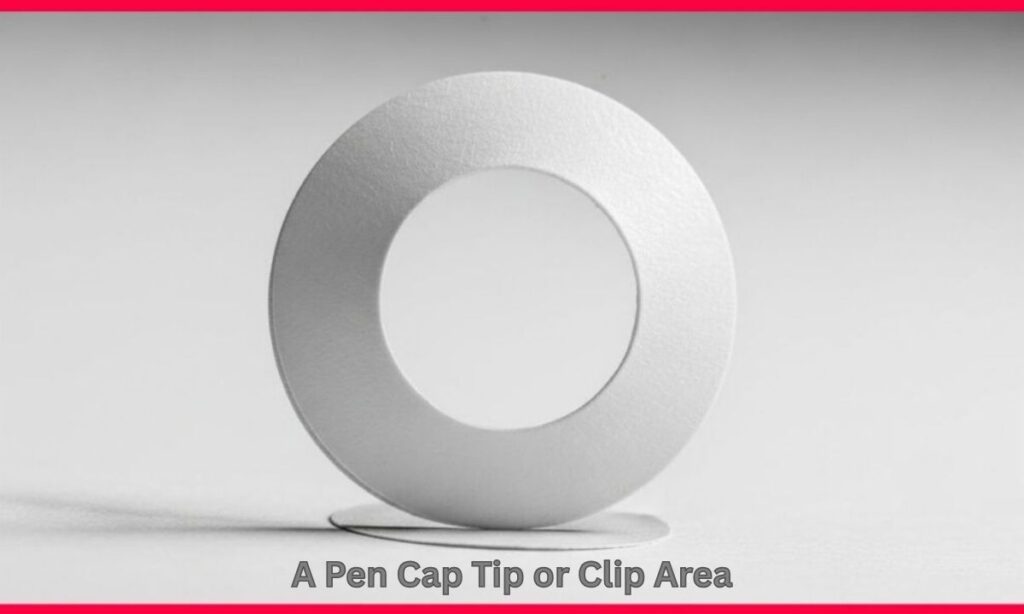
A paper hole reinforcer ring has an outer diameter of about 12 mm, but when you count the full tab width including the adhesive ring, the whole thing stretches close to 2 cm.
Stationery lovers will appreciate this one. Those tiny sticky rings are more useful than you thought.
They are a perfect example of small measurement guide material hiding in your school supply drawer.
13. A Compact Cigar Diameter
Ring gauge on a slender cigar (like a cigarillo) often hits right around 20 millimeters in diameter. That puts it squarely in our 2 cm measurement examples category.
You do not have to smoke to know this fact. It just shows how centimeter to millimeter conversion works in unexpected product sizes.
This one surprises people every time, which is exactly what makes it stick in memory.
14. A Slim Paperclip Cousin (Mini Versions)
Mini or small object dimensions paperclips (the kind sold as “mini” or “binder” clips in smaller sizes) often have total lengths right at 2 cm. They are the littler siblings of the standard clip.
These are common in offices, journals, and planners. Tiny but totally useful as a 2 cm reference object.
If the big paperclip gave you the width, the mini clip gives you the full length.
How to Visualize 2 cm When You Don’t Have Anything Nearby
No objects around? No problem. Your own body has built in tools for measuring without a ruler.
Your thumbnail width is one of the most accurate. For most adults, the thumbnail sits between 1.5 cm and 2 cm wide. Press your thumb to a surface and you are eyeballing 2 cm with your own hand.
Two stacked sugar cubes, the width of two standard pencils side by side, or the height of a small bottle cap all land near 2 cm length examples you can remember anywhere.
Everyday Life Moments Where 2 cm Actually Matters
You might wonder why you even need to know how long is 2 cm in daily life. The answer is more often than you think.
Hanging a picture frame and the hook needs to go exactly here. Cutting fabric for a small patch. Checking if a screw fits a hole. These are all moments where knowing 2 cm measurement examples from memory saves you a trip to find a ruler.
Doctors, tailors, carpenters, and even home cooks reference this size constantly. It is one of those practical measurement guide skills that quietly makes your everyday life smoother.
A Small Story About Tiny Measurements Around the World
In Japan, craftsmen use finger widths as traditional measurement units passed down for generations. In the UK, people still say “about the size of a 2p coin” to describe small objects. In the US, a nickel is the go to household measurement reference.
Every culture has figured out that real-world measurements work best when tied to familiar objects. It is not a new idea. It is just human nature to make sense of size through things we already know.
That is exactly what this guide does. It takes 2 cm in real life and gives it a face, a shape, and a story you will actually remember.
Quick Tips for Nailing Small Measurements Every Time
Keep a coin in your pocket. A nickel or similar coin is almost always close to 20 millimeters and works as a fast size check anywhere.
Use your thumbnail as a backup. It is always with you and almost always close to 2 cm wide for most adults.
Snap a photo next to a known object. Lay a paperclip next to whatever you are measuring and the object size comparison becomes instant and visual.
Conclusion
Two centimeters is small, but it is never invisible once you know what to look for . From a paperclip length to a nickel diameter to the clip on your pen, 2 cm reference objects are hiding in plain sight every single day.
The next time someone asks you what does 2 cm look like, you will have 14 answers ready without touching a ruler. That is the kind of knowledge that is small in size but big in usefulness.

Jaxon is a content writer and SEO specialist with 4 years of professional experience in creating engaging, research-driven articles.He specializes in simplifying complex topics into clear, reader-friendly content that improves user understanding and search visibility.