500 Feet Explained: 9 Everyday Size Comparisons

Ever seen the number 500 feet on a map or a weather report and just blanked?
You are not alone.
Feet are easy to say but hard to picture once the number gets big.
Here is the quick answer before we go deeper.
500 feet is about as tall as a 50 story building, or one and a half football fields laid end to end.
That is the short version.
Now let us break it down so it actually sticks in your head, with real objects you have probably seen in real life.
Exactly How Tall is 500 Feet? Quick Measurements
Numbers alone do not mean much until you turn them into something familiar.
So here is 500 feet broken into every unit you might need for school, work, or just settling an argument with a friend.
500 feet in meters is 152.4 meters.
500 feet in yards comes out to 166.67 yards, which is just over 55 yards short of two full soccer fields.
500 feet in miles is a small 0.095 miles, so do not expect it to cover much ground.
500 feet in kilometers rounds to 0.1524 kilometers.
500 feet in inches is a big 6000 inches, and in centimeters that becomes 15,240 centimeters.
500 feet in millimeters is 152,400 millimeters, which sounds huge but it is the same distance the whole time.
This kind of metric conversion matters if you work in construction, travel abroad, or just want to double check a recipe box that mixes imperial units with metric ones.
Keep this list handy because we will use a few of these numbers again later in the article.
9 Real Things That Are 500 Feet Long or Tall
Numbers are nice, but your brain remembers pictures better than digits.
So here are nine real world objects that match up almost exactly with 500 feet, based on things a lot of people have already seen with their own eyes.
This is your go to 500 feet comparison list for the rest of the article.
1. Washington Monument

The Washington Monument in Washington DC stands at 555 feet, which is close enough to give you a near perfect feel for 500 feet in real life.
Picture that tall white stone tower from photos or postcards.
Now shave a little height off the top and that is roughly your number.
This is one of the easiest ways to visualize 500 feet because so many people already know what the monument looks like from movies, coins, and school trips.
2. One and a Half Football Fields

A single American football field measures 360 feet including both end zones.
Stack half of another field onto that and you land almost exactly on 500 feet.
If you have ever stood at one end zone and looked toward the far end, you already have a built in sense of this distance.
Just add a little more field in your head and you are there.
3. A 50 Story Building

Most standard office floors run about 10 feet tall.
Multiply that by 50 floors and you get very close to 500 feet, making this one of the most practical height comparison examples for city dwellers.
Think of a mid size skyscraper you might pass on your way to work.
Not the tallest building in the skyline, but tall enough that you tilt your head back to see the top.
4. The Great Pyramid of Giza Original Height

When it was first built, the Great Pyramid of Giza stood at about 481 feet tall.
Over thousands of years, wind and erosion have worn it down a bit, but the original number sits close to our 500 foot measurement.
It is wild to think a structure built with no modern machines still gets used today as a size reference.
That original height puts it right in the same range as our other tall examples on this list.
5. A Small Cruise Ship

Smaller cruise ships built for river routes or shorter trips often run around 500 feet from bow to stern.
Larger ocean cruise ships stretch much longer, sometimes past 1000 feet, so this comparison works best for the smaller class of ships.
If you have taken a river cruise or seen one dock at a smaller port, you have basically walked the length of 500 feet without realizing it.
6. FAA Runway Touchdown Zone Bar Spacing

This one is for the aviation fans.
The FAA spaces certain touchdown zone marking bars on runways using increments tied to 500 foot length sections, helping pilots judge exactly where they are during landing.
Next time you fly, glance out the window during landing and you might spot these markings doing quiet, important work.
It is a small detail most passengers never notice, but it is a real world use of this exact measurement.
7. A Handysize Cargo Ship

Handysize cargo ships, one of the more common ship types moving goods around the world, typically run close to 500 feet long.
These ships are considered small compared to giant container ships, but they still haul thousands of tons of cargo across oceans every single day.
If you live near a working port, there is a good chance you have already seen one of these ships without knowing its length matched our number exactly.
8. Two Brooklyn Bridge Towers Stacked

The Brooklyn Bridge towers rise about 276 feet above the water.
Stack two of them on top of each other and you pass 500 feet with a little room to spare.
This gives you a fun mental image for anyone who has ever crossed that bridge or seen it in photos of the New York skyline.
9. The London Eye
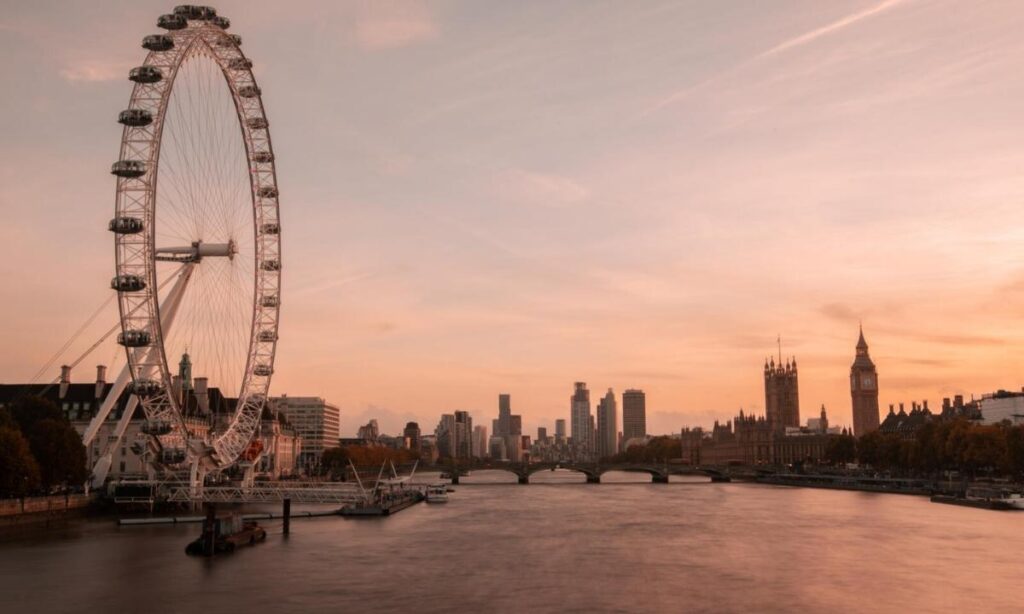
The London Eye on the South Bank of the Thames stands at 443 feet tall, which puts it just under our 500 foot measurement but close enough to use as a real world marker.
If you have ever ridden it or seen it in a photo of London, you already have a mental picture of something close to this height.
Add roughly one more story of a building on top of it and you would land right on 500 feet, so it is a handy landmark for anyone picturing this number outside the United States.
It is also proof that this kind of length comparison works no matter which country you are in, since big landmarks around the world tend to cluster around similar heights.
How to Picture 500 Feet Without a Ruler
Not everyone has a tape measure handy, so here are some quick mental tricks that work almost anywhere.
Count out about 165 average adult steps, since a normal walking stride covers roughly 3 feet.
Picture one and a half soccer fields placed end to end, since a soccer field runs close to 360 feet long.
Look up at a building around 45 to 50 floors tall, since most floors measure close to 10 feet each.
- Walk roughly 165 steps in a straight line
- Picture one and a half soccer fields end to end
- Look at a 45 to 50 story building
- Imagine two Brooklyn Bridge towers stacked
These tricks work well for distance visualization even if you are standing somewhere with no landmarks nearby.
Your own steps are honestly the easiest tool you already carry with you every day.
How Far Is 500 Feet
In plain terms, 500 ft distance is close to one and a half football fields or about a third of a city block in most American cities.
It is short enough to walk in under two minutes at a normal pace.
If you are picturing a straight road, it is roughly the length of two average city blocks combined, though block sizes do shift from city to city.
Runners often use this distance as a quick sprint marker, since 500 feet sits just under two full laps of a standard high school track hallway stretch.
500 Feet Compared to Similar Sizes
Sometimes it helps to see 500 feet sitting next to numbers close to it, so the scale feels less abstract.
400 feet is close to the height of a 40 story building, a touch shorter than our main comparisons.
600 feet pushes past most of our examples, landing closer to a large cargo ship or a taller skyscraper.
1000 feet roughly doubles our number, matching the height of some of the tallest buildings in major cities like Chicago or New York.
Seeing these numbers side by side makes it easier to place 500 feet correctly the next time you run into it on a map, a job site, or a weather alert about visibility distance.
Why 500 Feet Matters in Everyday Life
This number shows up more often than people realize.
Weather reports use it for visibility distance during fog or storms.
Construction codes reference it for safe distances from power lines or blast zones.
Drone rules from the FAA often mention 500 feet as a key altitude limit for recreational flights, so hobby pilots run into this exact number constantly.
Knowing what 500 feet looks like helps you follow these rules and reports without needing a calculator every time.
Common Mistakes People Make With 500 Feet
A lot of people round 500 feet up to a full mile without realizing a mile is over five times longer.
Others confuse feet and yards, forgetting that 500 feet is actually less than 167 yards, not 500 yards.
Some folks also mix up 500 feet with 500 meters, which is a huge gap since 500 meters equals about 1640 feet.
Keeping these three mix ups in mind saves a lot of confusion in construction plans, travel directions, and school assignments.
Conclusion
At this point, 500 feet should feel a lot less like a random number and a lot more like something you can picture instantly.
Whether it is the Washington Monument, a stack of Brooklyn Bridge towers, or just 165 of your own footsteps, you now have real world anchors to lean on.
Next time this measurement shows up in a weather report, a job site, or a trivia question, you will already know exactly how big it really is.Got your own favorite way to picture 500 feet? Drop it in the comments and share this guide with a friend who still thinks a foot and a yard are the same thing.

Jaxon is a content writer and SEO specialist with 4 years of professional experience in creating engaging, research-driven articles.He specializes in simplifying complex topics into clear, reader-friendly content that improves user understanding and search visibility.