What Time Was It 16 Hours Ago?

To find out what time it was 16 hours ago, take your current clock time and subtract 16 hours.
If your current hour is smaller than 16, you also roll the date back by one day.
So if it is 9:00 AM right now, 16 hours ago it was 5:00 PM yesterday. Simple as that.
Understanding the Basics of Calculating 16 Hours Ago
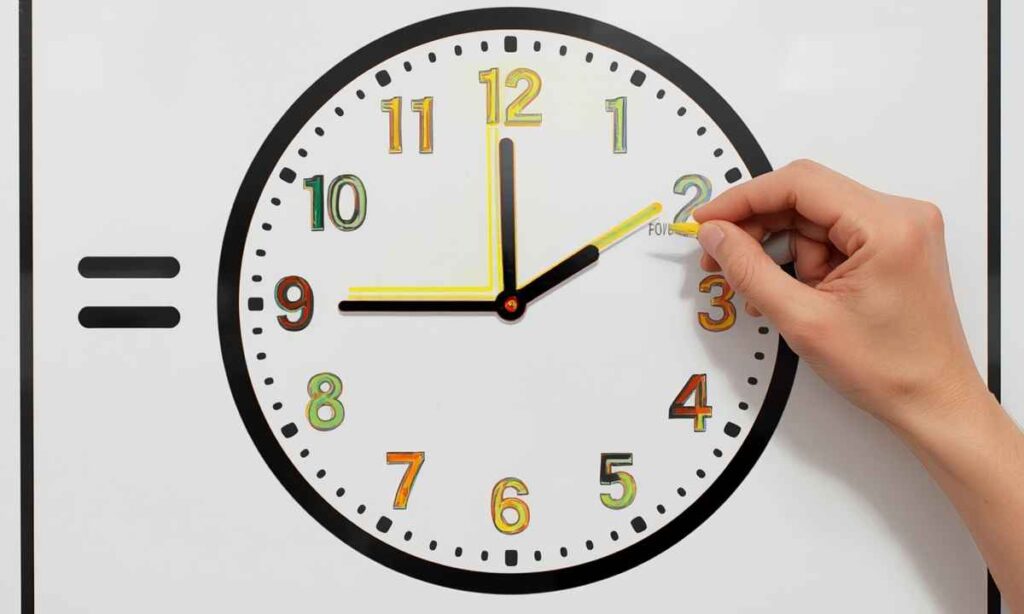
Time math feels tricky only because we mix up hours and dates in our head at the same time.
The trick is to treat it as one simple step. Subtract 16 from the current hour on a 24 hour clock.
If the number goes below zero, add 24 and move the date back one day. That is the whole method.
A basic time calculator does this instantly, but knowing the manual way helps when you do not have your phone handy.
What Time Was It 16 Hours Ago? Real Life Examples
Let us say it is 2:00 PM on a Wednesday. Subtract 16 hours and you land on 10:00 PM Tuesday night.
Another example, it is 6:30 AM Monday morning. Go back 16 hours and you get 2:30 PM Sunday afternoon.
One more, it is midnight, 12:00 AM Friday. Sixteen hours earlier was 8:00 AM Thursday morning.
Working through a few examples like this trains your brain to spot the pattern fast.
Why People Search When Was 16 Hours Ago
Most people search this because they are checking a message timestamp, a work log, or a flight record.
Someone might see “sent 16 hours ago” on a text or app and just want the actual clock time.
Others are tracking sleep, medication timing, or a delivery window and need the exact hour, not a vague guess.
It is a small question, but it saves real confusion in daily life.
What Time Was It 16 Hours Ago and Why Dates Matter
The date matters just as much as the hour. Miss it and your whole answer is wrong.
If the 16 hour jump crosses midnight, you are no longer talking about today. You are talking about yesterday.
This trips people up on Sunday nights and Monday mornings the most, since the week also flips over.
Always check both the clock and the calendar before you lock in your answer.
How Long Ago Was 16 Hours Ago
Sixteen hours ago is exactly two thirds of a full day gone by, since a day has 24 hours.
Picture your day split into three 8 hour chunks. Sixteen hours ago covers two of those chunks.
That means it usually lands in a totally different part of the day, morning becomes night, or the other way around.
How Long Was 16 Hours Ago Compared to a Full Day?
A full day is 24 hours, so 16 hours ago is 8 hours short of a complete day cycle.
In plain terms, it is not quite yesterday at the same time, it is yesterday but 8 hours earlier than that.
This is why a lot of people mix up “16 hours ago” with “yesterday,” when they are actually not the same thing.
Common Situations Where 16 Hour Calculations Are Important
Work and Shift Schedules
Shift workers often clock out and back in within a 16 hour window, especially on rotating schedules.
A nurse finishing a night shift might check what time it was 16 hours back to log an incident correctly.
Payroll systems also use this kind of math to calculate overtime and shift differences.
Sleep Tracking
Sleep apps often show “16 hours since you woke up” to flag when you might be overdue for rest.
Knowing the actual clock time behind that number helps you plan your evening instead of guessing.
It also helps parents track a baby’s feeding or nap schedule down to the hour.
Travel Planning
Long haul flights often land 16 or so hours after takeoff, and travelers want to know the local time on arrival.
This matters even more when the flight crosses several time zones, since the math stacks on top of the zone change.
A quick check before boarding saves you from missing connecting transport or hotel check in windows.
Digital Records
Apps like WhatsApp, Instagram, and email clients love showing “16 hours ago” instead of the real time.
If you are building a timeline of events, screenshots, or messages, converting that phrase into an actual time stamp matters a lot.
This is common in customer support logs and workplace investigations too.
When Was 16 Hours Ago Across Different Time Zones?
Time zones add a second layer on top of the basic 16 hour subtraction.
First subtract the 16 hours in your own zone, then adjust for the zone difference if you are checking someone else’s local time.
For example, if it is 3:00 PM in New York, 16 hours ago there was 11:00 PM the night before, but in London that same moment would already be a different local hour due to the time difference.
Local time zone detection on your phone or a browser based online timer handles this automatically, which saves a lot of manual math.
Mental Tricks for Calculating 16 Hours Ago Quickly
Method One: Subtract 12 Then 4
Break 16 into two smaller steps, 12 hours and then 4 more hours.
Twelve hours ago flips AM to PM or PM to AM on the same numbered hour. Then just subtract 4 more from that.
This two step trick is easier for most people than subtracting 16 all in one go.
Method Two: Add Eight and Move Back a Day
Since 16 is 24 minus 8, you can also add 8 hours and then shift the whole thing back one full day.
This works well when the current time is late at night, since adding 8 keeps the math in positive numbers.
Method Three: Use a 24 Hour Clock
Military or 24 hour time removes the AM and PM confusion completely.
If it is 14:00 right now, 16 hours ago was 22:00 the day before, no flipping needed.
Once you get comfortable reading a 24 hour clock, this becomes the fastest method of the three.
What Time Is It in 16 Hours?
This is the flip side of the question, and it uses the same logic in reverse.
Add 16 hours to the current time instead of subtracting it, and move the date forward if the hour rolls past midnight.
If it is 5:00 PM today, in 16 hours it will be 9:00 AM tomorrow. A future time calculator can double check this in seconds.
Technology Makes It Easier But Not Always
Phones, laptops, and smart devices handle time math instantly, and most people just trust the number on screen.
A basic time calculator or remaining time calculator removes the guesswork completely, and many are free and load right in the browser.
But tech is not perfect. Time zone bugs, daylight saving glitches, and app delays can throw off the number by an hour or more.
That is why understanding the manual method still matters, even with a good automatic time calculator in your pocket.
The Psychology Behind Time Calculations
Our brains are naturally better at counting forward than backward, which is why “16 hours ago” feels harder than “in 16 hours.”
Backward math forces you to picture the past, and memory is fuzzier than a straight countdown.
This is also why people round off. They say “about yesterday” instead of doing the exact subtraction, even when the real answer only takes a few seconds to work out.
Funny Mistakes People Make When Counting Backward
A classic one is forgetting to flip AM and PM after crossing midnight, so people end up saying 3 AM when they mean 3 PM.
Another common slip is forgetting the date change entirely, insisting something happened “today” when it was actually late last night.
Some people also just subtract 6 instead of 16 by accident, since the numbers blur together when you are doing it fast in your head.
What Was 16 Hours Ago From Now in Everyday Life
Think about a text message that says “delivered 16 hours ago.” If you got that alert at 10:00 AM, the message actually went out at 6:00 PM the evening before.
Or a fitness tracker showing your last workout was 16 hours back. If it is currently 7:00 AM, that workout happened around 3:00 PM the previous day.
These small checks pop up more often than people realize, from social media timestamps to grocery delivery windows.
Using Online Time Calculators
An online countdown timer or time calculator is the fastest way to check this without doing any mental math at all.
Just type in your current time, subtract 16 hours, and the tool spits out the exact result including the date change.
Many of these tools work as a schedule planner too, letting you track meeting countdowns, deadlines, or event countdowns in the same place.
Look for one with real time clock updates so the number stays accurate to the second while you are checking it, not just a static number that was calculated once and left frozen.
Quick Reference Table
| Current Time | 16 Hours Ago |
| 12:00 AM | 8:00 AM (previous day) |
| 6:00 AM | 2:00 PM (previous day) |
| 12:00 PM | 8:00 PM (previous day) |
| 6:00 PM | 2:00 AM (same day) |
| 11:59 PM | 7:59 AM (same day) |
Frequently Asked Questions
Is 16 hours ago always yesterday? Not always. If your current time is late at night, 16 hours ago can still fall on the same day.
Does daylight saving affect the answer? Yes, on the two days a year clocks shift, the 16 hour gap can be off by an hour unless your tool adjusts for it.
What is the fastest way to check this without a tool? Use the add 8 and shift the date back method. It is the quickest mental shortcut for most people.
Conclusion
Figuring out what time it was 16 hours ago comes down to one simple move, subtract 16 hours and check if the date needs to roll back too.
Whether you are reading a message timestamp, tracking sleep, or planning a flight, the same basic math applies every time.
Use a mental shortcut when you are in a hurry, or lean on a time management tool when you want the exact second without any second guessing.

Jaxon is a content writer and SEO specialist with 4 years of professional experience in creating engaging, research-driven articles.He specializes in simplifying complex topics into clear, reader-friendly content that improves user understanding and search visibility.